
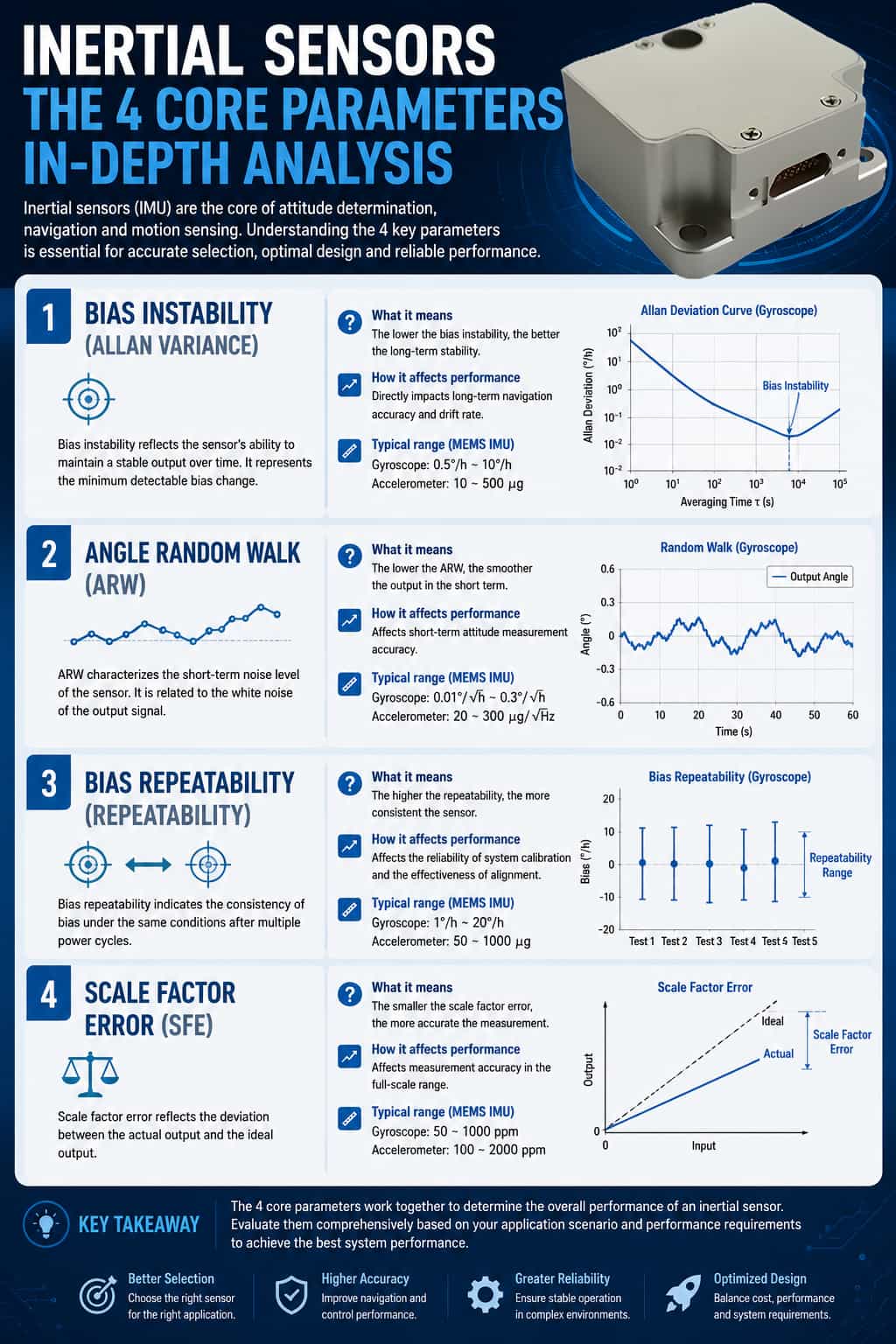
في مجالات الملاحة بالقصور الذاتي، والتحكم في الحركة، وقياس الوضع بدقة عالية، يُحدد أداء أجهزة الاستشعار بالقصور الذاتي (الجيروسكوبات ومقاييس التسارع) الحد الأقصى لدقة النظام ككل. بالنسبة للمهندسين، يُعد فهم الأهمية العملية للمعايير الرئيسية الواردة في جداول البيانات، وتأثيرها على تطبيقات الاستخدام النهائي، أمرًا بالغ الأهمية لاختيار المكونات وتصميم النظام. تُقدم هذه المقالة تحليلًا معمقًا لأربعة معايير هندسية أساسية من منظور عملي: استقرار الانحياز، والمشي العشوائي، وقابلية تكرار الانحياز، وعدم خطية عامل المقياس.
أولاً: استقرار الانحياز
1. التعريف والأهمية الفيزيائية
يشير استقرار الانحياز إلى مدى تذبذب خرج المستشعر حول قيمته المتوسطة في ظل ظروف ثابتة؛ ويُعرف عادةً بالنقطة الدنيا (أو المنطقة المستوية) على منحنى تباين ألان. بالنسبة للجيروسكوبات، تكون الوحدة عمومًا °/h (درجات في الساعة)؛ أما بالنسبة لمقاييس التسارع، فتكون mg أو μg.
يعكس هذا استقرار خرج المستشعر أثناء التشغيل الثابت لفترات طويلة. فعند استخدام جيروسكوب ألياف بصرية ذي استقرار انحياز يبلغ 0.01 درجة/ساعة، فإن تذبذب متوسط خرجه خلال ساعة واحدة يبلغ حوالي 0.01 درجة؛ وهذا مؤشر أداء بالغ الأهمية لأنظمة الملاحة بالقصور الذاتي عالية الدقة.
2. طريقة الاختبار الهندسي
ثبّت المستشعر على قرص دوّار عالي الدقة، مع التأكد من ثباته التام واستقرار درجة الحرارة المحيطة (مثلاً، داخل غرفة مضبوطة الحرارة عند 25 ± 0.1 درجة مئوية). اجمع البيانات الثابتة باستمرار لعدة ساعات (من 4 إلى 24 ساعة على الأقل). احسب تباين ألان واستخرج الانحراف المعياري عند أزمنة التنعيم (τ) مثل ثانية واحدة، و10 ثوانٍ، و100 ثانية؛ تتوافق قيمة استقرار الانحياز المثلى مع نقطة الانتقال بين جزء المنحنى ذي الميل -0.5 والمنطقة المستوية.
3. التأثير على النظام
يؤثر استقرار الانحياز بشكل مباشر على دقة الملاحة على المدى الطويل، ويحدد معدل تراكم الأخطاء الزاوية أثناء التكامل بالقصور الذاتي؛ فعلى سبيل المثال، يؤدي انحراف بمقدار درجة واحدة في الساعة إلى خطأ في الاتجاه يبلغ حوالي درجة واحدة خلال ساعة واحدة. علاوة على ذلك، يتطلب البحث عن الشمال بدقة عالية استقرارًا منخفضًا للغاية للانحياز (≤ 0.01 درجة في الساعة) لاستخلاص مُركِّبة الإشارة إلى الشمال من معدل دوران الأرض (15 درجة في الساعة) بكفاءة.
4. المفاهيم الخاطئة والاعتبارات الهندسية
لا تلتزم جميع أوقات التنعيم بمعيار موحد؛ فقد تُبلغ الشركات المصنعة المختلفة عن الاستقرار بناءً على تنعيم لمدة 10 ثوانٍ أو 100 ثانية، لذا يجب توحيد وقت التنعيم عند إجراء المقارنات. تتجاوز تأثيرات درجة الحرارة التقلبات الثابتة بكثير؛ إذ يمكن أن يكون تباين الانحياز عبر نطاق درجة حرارة التشغيل الكامل أكبر بمقدار يتراوح بين عشرة ومئة ضعف من الاستقرار الثابت. لذلك، يجب أن تركز التطبيقات الهندسية على الاستقرار المكافئ الذي يتم تحقيقه بعد التعويض الكامل لدرجة الحرارة.
ثانياً: المشي العشوائي
1. التعريف والأهمية الفيزيائية
يشير مصطلح "المشي العشوائي" إلى الخطأ العشوائي الناتج عن دمج الضوضاء البيضاء. بالنسبة للجيروسكوبات، يُعرف هذا باسم "المشي العشوائي الزاوي" (ARW)، ويُقاس بوحدة °/√h؛ أما بالنسبة لمقاييس التسارع، فيُعرف باسم "المشي العشوائي للسرعة" (VRW)، ويُقاس بوحدة m/s/√h أو (m/s)/√h.
يُحدد هذا المقياس شدة طاقة الضوضاء البيضاء عالية التردد في خرج المستشعر. بالنسبة لجيروسكوب ذي انحراف زاوي نسبي (ARW) مقداره 0.01°/√h، يكون الانحراف المعياري للخطأ الزاوي الناتج عن الضوضاء البيضاء خلال ساعة واحدة من التكامل 0.01° × √1 = 0.01°؛ أما إذا تم التكامل لمدة 0.01 ساعة (36 ثانية)، فإن الخطأ يكون 0.01 × √0.01 = 0.001°. ويتناسب الخطأ طرديًا مع الجذر التربيعي للزمن.
2. أساليب الاختبار الهندسية
يتم الحصول على هذه المعلمة أيضًا من خلال تحليل تباين ألان. عند القيم الصغيرة لـ τ (عادةً <يمكن اشتقاق معامل المشي العشوائي من جزء منحنى تباين ألان ذي الميل -0.5. بدلاً من ذلك، يمكن حسابه عن طريق تكامل كثافة القدرة الطيفية (PSD) ضمن النطاق الترددي ذي الصلة.
3. التأثير على النظام
يؤثر المشي العشوائي بشكل أساسي على دقة الحركة الديناميكية على المدى القصير؛ إذ يُضيف تشويشًا ويُقلل نسبة الإشارة إلى التشويش أثناء الاهتزاز أو الدوران عالي السرعة. وقد يُؤدي المشي العشوائي المفرط إلى إثارة حلقة التحكم، مُسببًا ارتعاشًا، وفي أنظمة الملاحة المتكاملة، يُؤثر على معدل التقارب وتباين الحالة المستقرة لمرشح كالمان.
4. المفاهيم الخاطئة والاعتبارات الهندسية
يُعدّ كلٌّ من المشي العشوائي واستقرار الانحياز مستقلين ولكنهما مرتبطان؛ فالمشي العشوائي يُحدّد الضوضاء قصيرة المدى، بينما يُحدّد استقرار الانحياز الانحراف طويل المدى. يجب تحسين كليهما في آنٍ واحد، لأنّ التركيز على الأول فقط قد يؤدي إلى انحراف مفرط طويل المدى.
ثالثًا: قابلية تكرار الانحياز
1. التعريف والأهمية الفيزيائية
يشير تكرار الانحياز إلى اتساق خرج نقطة الصفر للمستشعر عبر أحداث بدء التشغيل المختلفة. ويشترك في نفس وحدات استقرار الانحياز (درجة/ساعة أو ملليغرام).
يعكس ذلك مدى قابلية التنبؤ بالمستشعر، سواء بين الدفعات أو بعد كل تشغيل. تتطلب المستشعرات ذات التكرارية الضعيفة إعادة معايرة الانحياز عند كل بدء تشغيل؛ وإلا سيحدث خطأ ثابت (انحراف).
2. أساليب الاختبار الهندسية
في ظل ظروف بيئية متطابقة، قم بإجراء اختبارات تشغيل متعددة (≥10 مرات) على نفس المستشعر، وسجل قيمة الانحياز المستقرة في كل مرة. احسب الانحراف المعياري (1σ) أو المدى (الحد الأقصى ناقص الحد الأدنى) لقيم الانحياز هذه.
3. التأثير على النظام
تحدد قابلية تكرار الانحياز ما إذا كان المستشعر يحتاج إلى إعادة معايرة عند كل تشغيل. إذا كانت قابلية التكرار أعلى من الخطأ المسموح به للنظام، فيمكن استخدام قيم معايرة المصنع مباشرةً؛ وإلا، فيجب تطبيق عملية معايرة ذاتية. علاوة على ذلك، في التكوينات متعددة التكرار، تؤثر قابلية التكرار بشكل مباشر على الاتساق بين المستشعرات، وبالتالي تحدد مدى تعقيد منطق التصويت.
4. المفاهيم الخاطئة والاعتبارات الهندسية
من الضروري التمييز بين التكرارية والاستقرار: يقيس الاستقرار التقلبات أثناء التشغيل، بينما تعكس التكرارية التحولات بين دورات التشغيل المختلفة. حتى مع الاستقرار العالي للغاية (مثل 0.01 درجة/ساعة)، فإن ضعف التكرارية يجعل المستشعر غير مناسب للاستخدام المباشر في الملاحة عالية الدقة. بالمقارنة مع مستشعرات الأنظمة الكهروميكانيكية الدقيقة (MEMS)، يمكن لمقاييس التسارع الكوارتزية تحقيق تكرارية انحياز أقل من 50 ميكروغرام، مما يجعلها مناسبة بشكل خاص للتطبيقات المتطورة التي تتطلب تشغيلًا طويل الأمد دون الحاجة إلى معايرة.
رابعاً: عدم الخطية في عامل المقياس
1. التعريف والأهمية الفيزيائية
يشير عدم الخطية في عامل المقياس إلى مدى انحراف العلاقة التناسبية بين تغيرات خرج المستشعر ومدخلاته عن الخط المستقيم المثالي؛ ويُعبَّر عنه عادةً كنسبة مئوية من المقياس الكامل (% FS) أو بأجزاء في المليون (ppm). على سبيل المثال، نطاق ±500 درجة/ثانية مع عدم خطية 50 جزءًا في المليون يعني خطأً أقصى في عدم الخطية مقداره 500 × 50 × 10⁻⁶ = 0.025 درجة/ثانية. يحدد هذا المعامل دقة قياس المستشعر عبر نطاق ديناميكي واسع (مثل معدلات الدوران العالية أو التسارعات العالية).
2. أساليب الاختبار الهندسية
ثبّت المستشعر على طاولة قياس معدل الدوران (للجيروسكوبات) أو جهاز طرد مركزي (لمقاييس التسارع). طبّق معدلات إدخال مختلفة (مثل: 0، ±50، ±100، ±200، ±500 درجة/ثانية) وسجّل المخرجات. ارسم خطًا مستقيمًا باستخدام طريقة المربعات الصغرى، واحسب أقصى انحراف لنقاط القياس عن هذا الخط، ثم اقسم الناتج على نطاق القياس الكامل للحصول على قيمة اللاخطية.
3. التأثير على النظام
قد يصبح عدم الخطية في معامل المقياس مصدرًا رئيسيًا للخطأ في السيناريوهات عالية الديناميكية (مثل الصواريخ أو الطائرات عالية الأداء)؛ فحتى بعد المعايرة متعددة النقاط، قد يؤدي عدم الخطية إلى بقايا استيفاء. علاوة على ذلك، يؤثر عدم الخطية في مقياس التسارع على دقة تكامل السرعة، لا سيما أثناء العمليات المطولة التي تتطلب قدرة عالية على المناورة.
4. المخاطر والاعتبارات الهندسية
عند تقييم عدم الخطية في عامل المقياس، تجدر الإشارة إلى أن قيمة الخطأ المطلق ترتبط ارتباطًا مباشرًا بنطاق القياس؛ فلا يمكن الحكم على الأداء بناءً على قيمة جزء في المليون فقط (على سبيل المثال، ينتج عن 100 جزء في المليون خطأ قدره 0.01 درجة/ثانية عند نطاق 100 درجة/ثانية، ولكن زيادة النطاق عشرة أضعاف تزيد الخطأ عشرة أضعاف). بالإضافة إلى ذلك، يُعد عدم التناظر بين الاتجاهين الموجب والسالب أمرًا بالغ الأهمية للمنصات المتناظرة دورانيًا. كما تؤثر درجة الحرارة بشكل كبير على عدم الخطية؛ إذ غالبًا ما تتجاوز الاختلافات عبر نطاق درجة حرارة التشغيل الكامل القيم المقاسة عند درجة حرارة الغرفة، مما يستلزم تعويض درجة الحرارة.
ملخص
عند اختيار المكونات للتطبيقات الهندسية، تجنب البحث عن القيمة "المثلى" لمعامل واحد بمعزل عن غيره. بدلاً من ذلك، قيّم المعاملات الأساسية الأربعة بشكل شامل، مع مراعاة توزيع أخطاء النظام، وبيئة التشغيل، ودورات المعايرة، وقيود التكلفة. في الوقت نفسه، من الضروري مطالبة الموردين بتوفير منحنيات تباين ألان ومخططات أداء كاملة النطاق الحراري، بدلاً من مجرد القيم النموذجية. فقط من خلال فهم عميق للفيزياء الأساسية وخصائص انتشار الأخطاء المرتبطة بهذه المعاملات، يمكن تصميم أنظمة قصور ذاتي قوية وعالية الأداء.
ترك رسالة
امسح ضوئيًا إلى WeChat :